
What this kind of roof work should sort out
Roof edge and flashing linked
We assess both when water marks suggest the trouble may cross between them.
Drainage restored properly
The aim is to move water away from the building, not merely tidy the symptoms.
Access planned for longer runs
Clear working space matters when roofline work extends along more of the property.
Roof edges and lead details keep water moving
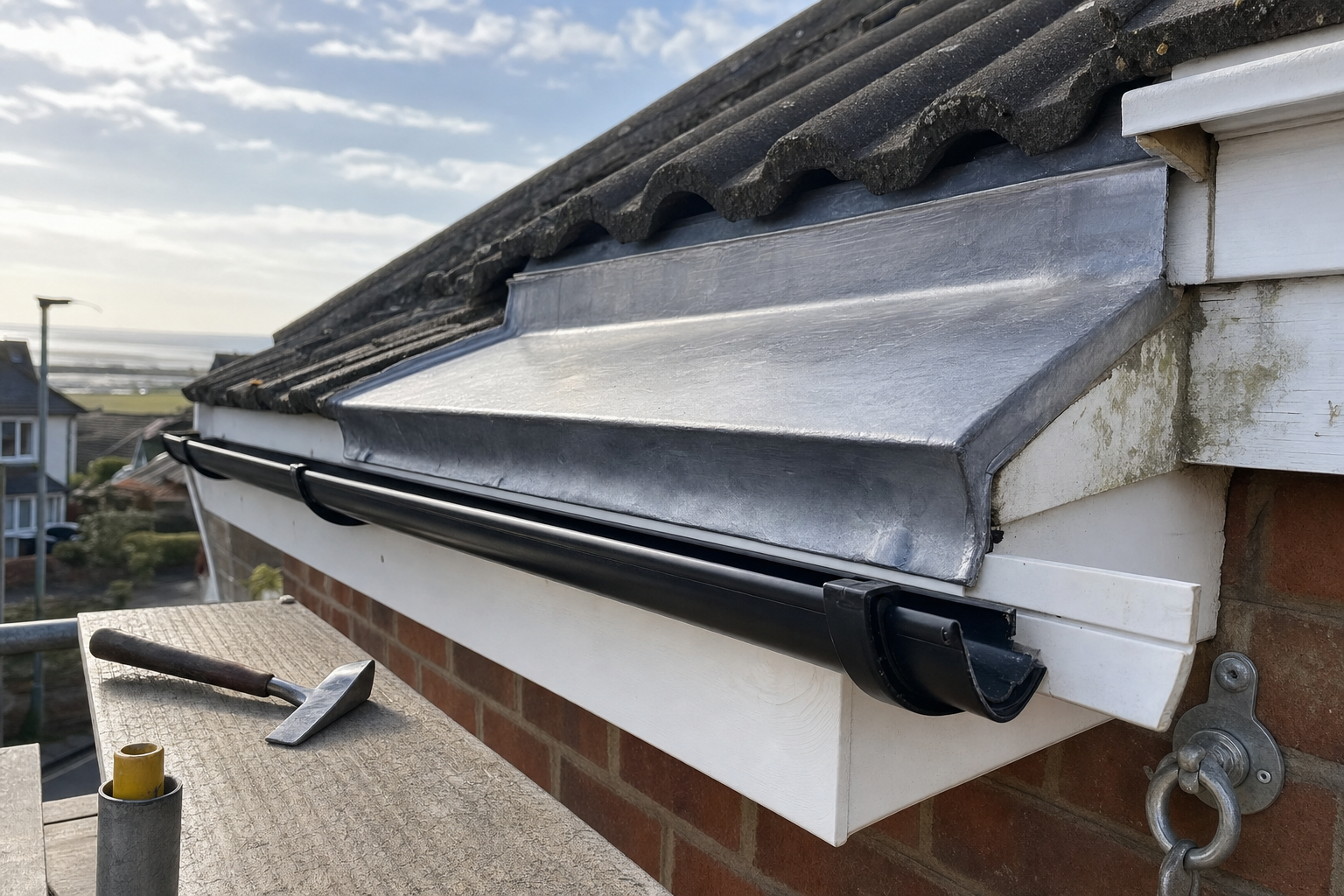
Water has a talent for finding the weak point where the roof edge and junction details have stopped doing their job. With Calibre Roofing, roofing visits in Burnham-on-Sea are focused on fascias, soffits, guttering and leadwork repairs because those parts protect different sections of the roof while working together to direct water away from the building. We inspect staining, overflow, loose sections, failed joints and deteriorated flashing to see whether the issue sits at the roof edge, higher up the roof or across both areas. That joined-up look matters, because a tired flashing detail and a failing gutter run can each make the other look guiltier than it is.
Planning access for roof edges and higher junctions
A visit from Calibre Roofing, starts with safe access to the roofline or leadwork detail that appears to be failing. In Burnham-on-Sea, that can mean continuous work along roof edges, inspection of higher junctions and clear space around the property for ladders or other suitable equipment. We assess how the different components are directing water, whether sections can be repaired locally and whether broader renewal is needed to restore proper drainage and weather protection. Once the problem has been seen on site, we can explain the right next step without treating every stain or overflow mark as if it came from the same place.
Frequently asked questions
Can roofline and leadwork be checked together?
Yes, and that is often the best way to understand where the water issue really begins. Fascias, soffits and gutters deal with the roof edge, while lead protects vulnerable junctions higher up. Looking at both together helps us tell whether the fault is local, linked or happening in more than one place.
What signs point to roof-edge or flashing trouble?
Common signs include staining on walls or boards, gutter overflow, loose sections, joints that leak in rain and visible deterioration in flashing around junctions. Those clues can overlap, which is why we inspect the connected details rather than assuming the first visible mark tells the whole story.
What access is useful before the visit?
Enough clear space around the relevant side of the property for ladders or other safe equipment is a big help, especially when work may run along a longer roof edge. If there are narrow paths, conservatories or obstacles beneath the affected area, telling us early helps us plan more accurately.